Routes
Nodes can advertise routes - subnets they will relay traffic for, or default routes that make them exit nodes. Advertising is only an offer; the Routes view is where an operator decides what the tailnet actually honors.
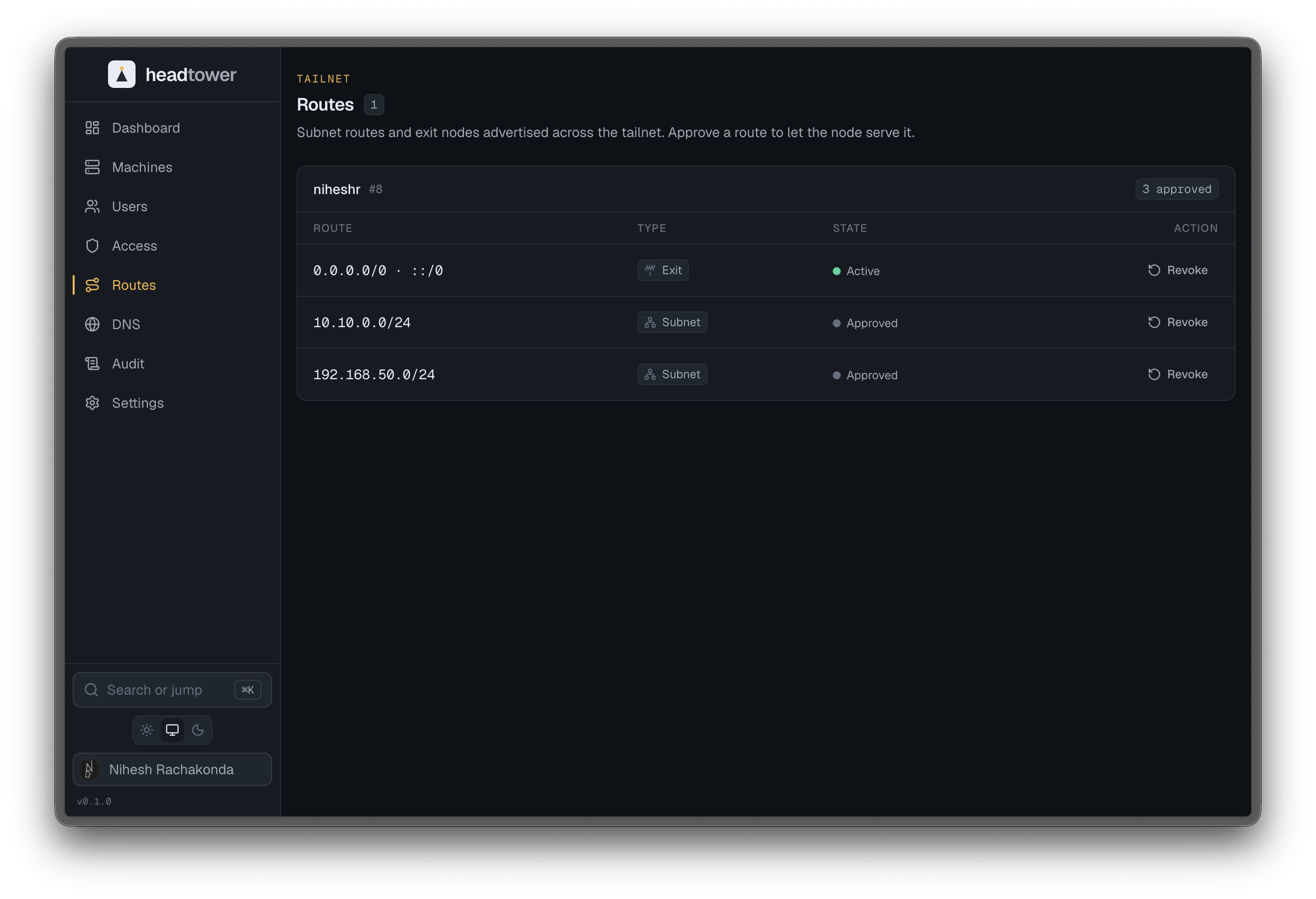
Pending versus approved
Headtower keeps the distinction sharp:
- A pending route is advertised by a node but not yet approved. It is inert - it does nothing until you act.
- An approved route is live - other nodes can use it.
Each route shows the CIDR (or default route, for an exit node) and the node advertising it, in mono so a list of subnets lines up cleanly. Approving or revoking a route is a single, explicit action.
Exit nodes are just routes too - they advertise default routes. Headtower surfaces them in the same place, so “can this node be an exit node?” is one toggle, not a separate hunt.
Auto-approvers
Approving the same routine routes by hand gets old. Auto-approvers, defined in policy, let you say up front “routes like these, from owners like these, are approved automatically” - so a freshly enrolled subnet router or exit node comes online without a manual step.
Auto-approvers live in the policy, so they are edited alongside the rest of your Access & ACLs. Headtower shows which approvals were automatic versus operator-made, so the audit trail stays honest.
Auto-approval is powerful - it grants reachability without a human in the loop. Scope auto-approvers tightly, by tag and owner, so a misadvertised route cannot quietly widen the network.